The Graham Weekly Album Review #1405
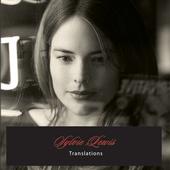
Click on CD Cover for Audio Review in Real Audio format | |
(Cheap Lullaby Records 004 As broadcast on WVIA-FM 5/18/2005)
| Click on CD Cover for Audio Review in Real Audio format | |
(Cheap Lullaby Records 004 As broadcast on WVIA-FM 5/18/2005)
We have had our share of chanteuse style vocalists recently, which for the most part is a good thing. Probably the pattern for the current generation of romantic, cabaret-influenced female vocalists goes back to the 1980s with k.d. lang. But the most popular, and perhaps the catalyst for the current proliferation of artists in the style is Norah Jones. And when a variety of different artists are attracted to the form, naturally, some new variations emerge. This week, we have an appealing example: Sylvie Lewis, whose debut CD is called Tangos & Tantrums.
Los-Angeles-based British native Sylvie Lewis has taken the style of the chanteuse and added a folkie singer-songwriter's lyrical flare with a definite sense of wit and whimsy. The chanteuse style lends itself naturally to love songs, and most of Ms. Lewis' compositions deal with the songwriter's most frequent topic, but she adds lots of different and clever variations on the theme. Titles like All His Exes, My Rival, and When I Drink give an indication of the direction Ms. Lewis can take. The musical accompaniment is also perfect for the chanteuse style with almost all acoustic instrumentation, including some sparse strings and horns, and left-field instruments like harmonica. Ms Lewis herself plays mainly acoustic guitar. Her principal collaborator on the CD is Richard Swift, who co-produced the CD with Ms. Lewis, wrote one of the songs, and does some vocals.
The CD's title Tangos & Tantrums turns out to be quite appropriate, as there is some tango influence, and the lyrics do relate some stories of relationships leading to tantrums. Musically, Ms Lewis also favors waltzes, and the accompaniment is an interesting blend of 1930s with come contemporary influences. It all ends up sounding curiously timeless, and often quite charming. Also adding to the CD's appeal is Ms. Lewis' notes on the songs. In the booklet where one would expect to find printed lyrics, instead are stream of consciousness commentaries for each song, which may or may not have to do the song in question.
Though Tangos & Tantrums contains 12 songs, they are all rather short, so the CD times in at under 40 minutes, but there is hardly wasted moment. The CD opens with By Heart, whose tune sounds vaguely like an old folk song, with the interesting lyrics typical of Ms. Lewis. <<>>
With a more retro-sound is All His Exes, one of the cleverest sets of lyrics on the CD. It puts a kind of jaunty spin onto a potentially uncomfortable social situation. <<>>
The tango aspect is hinted at in the song Rockwell's Blues, which uses the occasion of a visit to a museum of Norman Rockwell paintings to lead to another sticky situation. <<>>
Promises of Paris seems like a natural title for a chanteuse style vocalist. Ms. Lewis follows the thread both lyrically and musically with the quirky harmony vocals. It's another distinctive and creative piece. <<>>
This kind of style naturally conjures images of smoky, elegant bars. So Ms. Lewis came up with a drinking song called, logically enough When I Drink. It's a melancholy waltz with an old-fashioned mellotron keyboard providing the aura of a string section. <<>>
Another track with a distinctive and quirky charm is The Movies, a long song for a couple who would rather stay together than go someplace like the movies. <<>>
Ms. Lewis' collaborator Richard Swift makes a lead vocal appearance on a song he co-wrote with Ms. Lewis called Conversation Piece. Though having another voice is central to the song's interesting lyrics, Swift's vocal presence is not the best thing musically the CD has going for it. <<>>
My favorite piece on the CD is My Rival, which Ms. Lewis said was inspired by a poem by Rudyard Kipling. The song epitomizes the creative, quirky cabaret influenced sound of the CD. <<>>
With the numbers of chanteuse styled singers on the scene these days, it's only natural that someone would start doing something new and clever with the musical format. Sylvie Lewis has done just that on her impressive debut recording Tangos & Tantrums. She has all the qualities of the romantic ballad or cabaret singer, but she creates songs that incorporate some more contemporary influences, sometimes mixing influences like the 1930s and 1960s at the same time. Her lyrically astute and downright clever songs are a nice fit for her vocal style, which implies a little of the cabaret singer's ennui, with a more youthful exuberance. The result is plenty of charm without going over-the-top. The instrumental backing also adds much to the CD, hinting at the authentically old, while throwing in some quirky little non-sequitors.
Our sonic grade is about a "B-plus" the efforts to hint at the old fashioned occasionally extend to the mix, with some parts having an intentionally muddy sound. Fortunately, it does not happen all the time, and Ms. Lewis' voice is well-captured. The dynamic range is mediocre, with a good part of the CD having a compressed sound.
In contrast to others on the scene, I suppose you could call Sylvie Lewis an imaginative singer-songwriter who happens to sing in the style of a chanteuse, rather than just a romantic singer. Her CD introduces us to a distinctive and creative new artist.
(c) Copyright 2005 George D. Graham. All rights reseved.
This review may not be copied to another Web site without written permission.
Comments to George: 
 To Index of Album Reviews | To George Graham's Home Page. | What's New on This Site.